As the day unfolds, traditional craftwork takes shape. Local artisans weave, carve and create using skills passed down over time. Each handcrafted piece reflects cultural identity and pride, while also providing an important source of income for families.
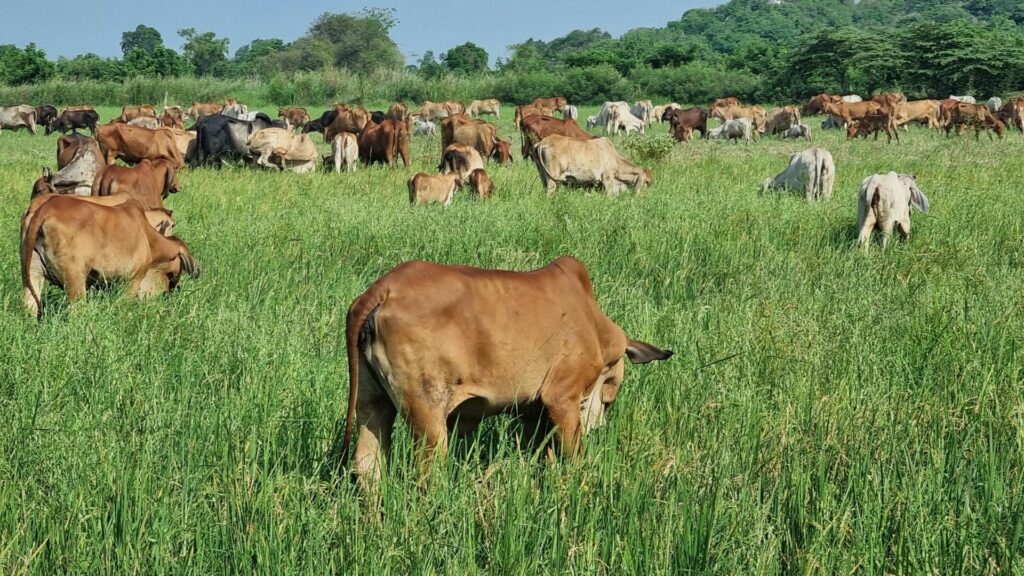
Beyond handicrafts and artisan work, daily life in rural Eswatini is shaped by responsibility learned early. At sunrise, young boys guide cattle out of the kraals and into nearby grazing fields before setting off for school. These moments are part of growing up—where learning happens both in the classroom and on the land.
After school, the boys return to the fields, gently leading the cattle back home before dusk. This daily rhythm teaches care, discipline and respect for livestock, which remains central to Swazi culture and family livelihoods. It’s a reminder that in rural communities, tradition and modern life move forward side by side.
Life in a rural Swazi homestead is shaped by strong community bonds. Neighbours support one another, knowledge is shared openly and daily life is deeply connected to people, land and tradition.